
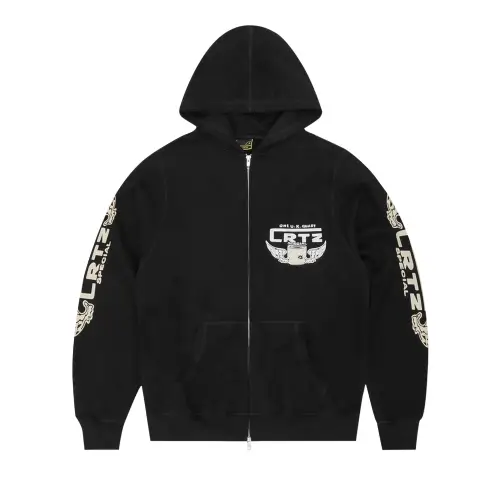

In today’s fast-moving fashion world, where trends rise and fall in weeks, very few names manage to break through the noise and become something deeper than just apparel. Corteiz is one of those rare exceptions. It is not simply a clothing label; it is a coded language of youth culture, rebellion, exclusivity, and identity.
Unlike traditional fashion houses that rely on seasonal marketing and mass distribution, Corteiz operates on a completely different philosophy. It thrives on unpredictability, scarcity, and community-driven hype. For many young people, wearing Corteiz is not just about style—it is about belonging to a movement that feels intentionally hidden from the mainstream world.
The Origins: How Corteiz Built Its Own Universe
Corteiz was founded in London by Clint Ogbenna, known as Clint 419, in 2017. From the beginning, the brand rejected the conventional rules of fashion marketing. Instead of polished campaigns and retail chains, it grew through raw street energy, social media secrecy, and underground drop culture.
The iconic Alcatraz logo—representing a prison island—was not chosen randomly. It symbolizes breaking boundaries, escaping systems, and refusing to be controlled. That message resonated strongly with a generation that often feels boxed in by social expectations, financial pressure, and rigid cultural structures.
What makes Corteiz’s origin story powerful is not just where it started, but how it evolved. It did not rely on celebrity endorsements or traditional advertising. Instead, it built loyalty through scarcity. People did not simply buy Corteiz—they chased it.
The Corteiz Philosophy: “Rules the World”
At the heart of Corteiz lies a bold slogan: “Rules the World.” This is not just branding—it is a declaration of independence. The phrase represents the brand’s refusal to follow fashion industry rules and instead create its own ecosystem.
Where most brands aim for accessibility, Corteiz does the opposite. It restricts access. Where most brands want visibility, Corteiz often thrives on controlled invisibility. This paradox is what makes it so powerful.
The brand does not just sell clothing; it sells participation in a culture where exclusivity equals identity. If you understand Corteiz, you are already part of the story. If you don’t, you are outside of it.
Drop Culture: The Engine Behind the Hype
One of the most defining features of Corteiz is its drop-based release system. Instead of keeping products available year-round, the brand releases items in unpredictable, limited-time drops that often sell out within minutes.
These drops are not just online events—they are experiences. Sometimes passwords are required to enter the website. Other times, pop-up locations are announced last minute, forcing fans to physically chase the brand across cities.
This system creates urgency and emotional intensity. Buying Corteiz is not a casual shopping experience; it feels like winning access to something rare and temporary.
The unpredictability also strengthens community engagement. Fans constantly monitor social media, decode hints, and share information like insiders. This transforms customers into active participants in the brand’s ecosystem.
Design Language: Raw, Functional, and Symbolic
Corteiz clothing stands out because of its distinct design identity. It does not rely on luxury minimalism or flashy logos in the traditional sense. Instead, it blends street functionality with symbolic graphics that reflect resistance and identity.
Common pieces include cargos, hoodies, mesh jerseys, tactical-style jackets, and oversized tees. These are not designed for runway aesthetics—they are designed for real-world street environments.
The Alcatraz logo appears frequently, reinforcing the brand’s core message of freedom from systems. Other motifs often reference rebellion, underground culture, and urban survival themes.
Even the color palette plays a role. Earth tones, military greens, deep blacks, and muted neutrals dominate collections, giving the clothing a grounded, tactical feel rather than a luxury fashion aesthetic.
Cultural Impact: From London Streets to Global Influence
What started in London quickly expanded into a global streetwear phenomenon. Corteiz is now recognized in cities like Paris, New York, Lagos, and Tokyo. Yet despite its global reach, it maintains a deliberately underground identity.
A major reason for its cultural impact is authenticity. In an era where many brands attempt to replicate street culture for profit, Corteiz originates from within it. That authenticity cannot easily be manufactured.
Music culture has also played a major role in its rise. UK rap and drill artists frequently wear Corteiz, reinforcing its connection to youth expression. When artists appear in Corteiz pieces, it is not product placement—it feels like shared identity.
Scarcity as Strategy: Why Hard-to-Get Makes It Powerful
One of the most misunderstood aspects of Corteiz is its deliberate scarcity. While most brands scale production to meet demand, Corteiz limits supply intentionally.
This strategy creates emotional value. When something is difficult to obtain, it becomes more desirable. But beyond marketing psychology, it also reinforces the brand’s philosophy: not everyone should have access.
Scarcity also protects authenticity. By limiting supply, Corteiz ensures its clothing retains cultural weight rather than becoming diluted through overexposure.
Community Over Consumers: The Corteiz Mindset
Corteiz does not treat its audience as customers in the traditional sense. Instead, it treats them as a community. This distinction is critical.
The brand frequently engages through social media in a raw, unfiltered tone. It avoids polished corporate messaging and instead speaks in street language that feels direct and real.
Pop-up events further strengthen this connection. Fans gather not just to buy clothes but to participate in shared experiences—sometimes even exchanging items in unconventional ways that reflect the brand’s rebellious spirit.
This sense of belonging is what keeps people loyal. They are not just buying a hoodie or a pair of cargos; they are buying into a shared identity.
Criticism and Controversy: The Double-Edged Sword of Exclusivity
Like any disruptive brand, Corteiz is not without criticism. Some argue that its extreme exclusivity creates unnecessary barriers, making it inaccessible to many fans who genuinely connect with the brand’s message.
Others question whether hype-driven scarcity can remain sustainable in the long term. As demand grows, maintaining authenticity while scaling becomes increasingly difficult.
However, these criticisms also highlight the brand’s success. Very few labels in modern fashion generate this level of debate and emotional investment. Love it or question it, Corteiz remains impossible to ignore.
The Future of Corteiz: Evolution or Expansion?
The future of Corteiz sits at an interesting crossroads. On one hand, its identity depends on remaining underground, unpredictable, and limited. On the other hand, global demand continues to grow rapidly.
The challenge for the brand will be balancing expansion with authenticity. If it becomes too accessible, it risks losing its core identity. If it remains too exclusive, it may limit its long-term growth.
However, based on its history, Corteiz has consistently shown an ability to evolve without compromising its core philosophy. Whether through collaborations, pop-ups, or innovative digital drops, it continues to reshape what streetwear can be.